
By PRATYUSH JHA & RAKESH KUMAR CHAUDHARY
A version of this article was published in The Rising Nepal on 28 August 2025.
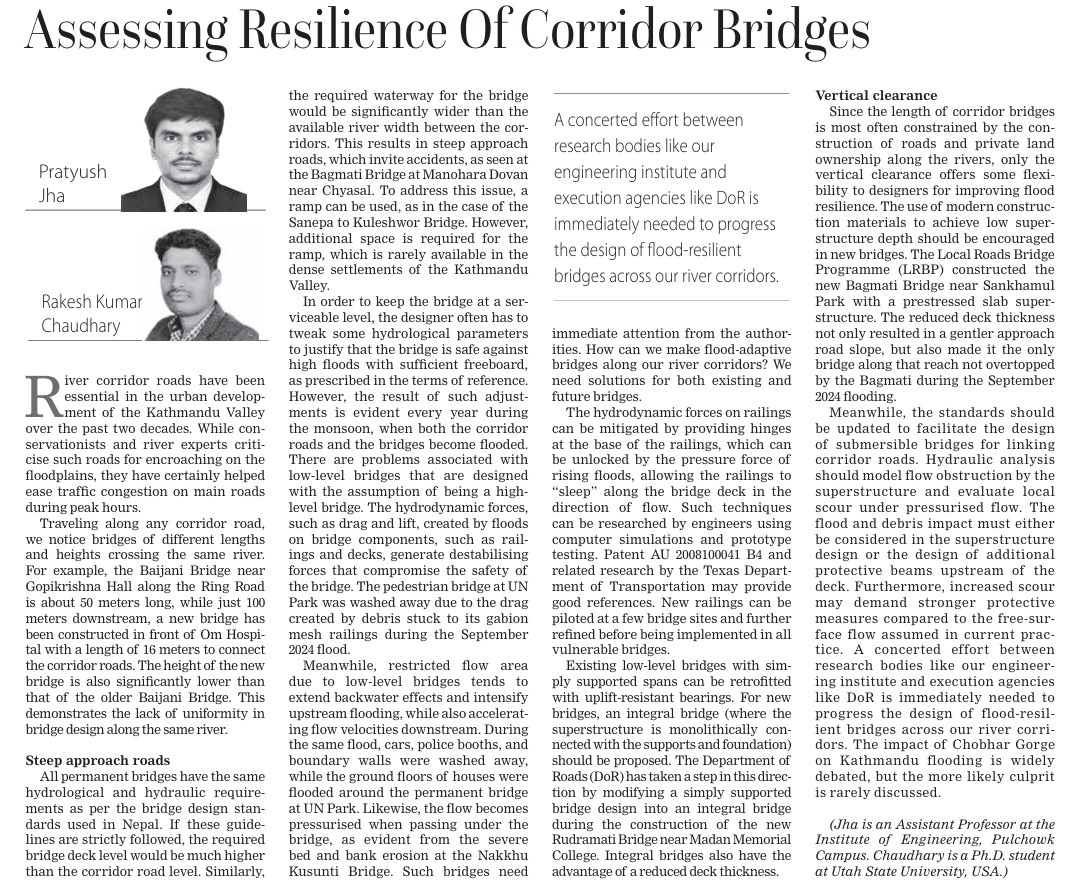
River corridor roads have been essential in the urban development of the Kathmandu Valley over the past two decades. While conservationists and river experts criticize such roads for encroaching on the floodplains, they have certainly helped ease traffic congestion on main roads during peak hours.
Traveling along any corridor road, we notice bridges of different lengths and heights crossing the same river. For example, the Baijani Bridge near Gopikrishna Hall along the Ring Road is about 50 meters long, while just 100 meters downstream, a new bridge has been constructed (in front of Om Hospital) with a length of 16 meters to connect the corridor roads. The height of the new bridge is also significantly lower than that of the older Baijani Bridge. This demonstrates the lack of uniformity in bridge design along the same river.
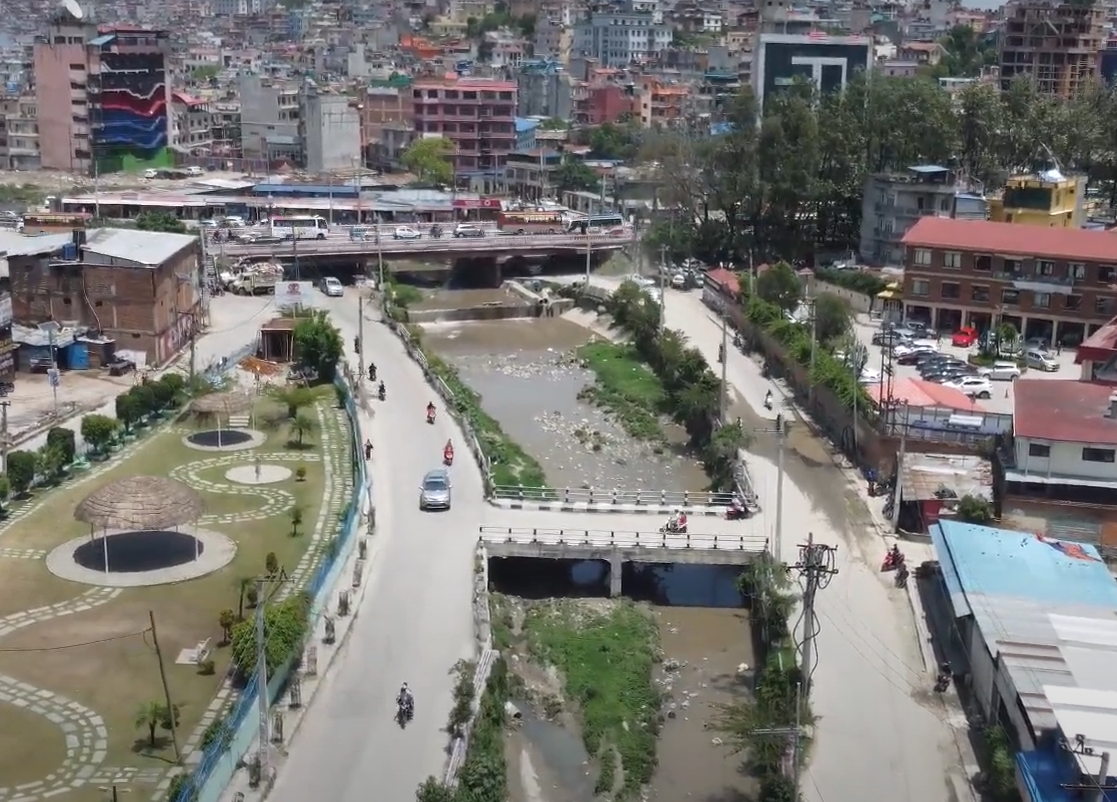
All permanent bridges have the same hydrological and hydraulic requirements as per bridge design standards used in Nepal. If these guidelines are strictly followed, the required bridge deck level would be much higher than the corridor road level. Similarly, the required waterway for the bridge would be significantly wider than the available river width between the corridors. This results in steep approach roads, which invite accidents, as seen at the Bagmati Bridge at Manohara Dovan near Chyasal. To address this issue, a ramp can be used, as in the case of the Sanepa to Kuleshwor Bridge. However, additional space is required for the ramp, which is rarely available in the dense settlements of the Kathmandu Valley.
In order to keep the bridge at a serviceable level, the designer often has to tweak some hydrological parameters to justify that the bridge is safe against high floods with sufficient freeboard, as prescribed in the terms of reference. However, the result of such adjustments is evident every year during the monsoon, when both the corridor roads and the bridges become flooded.
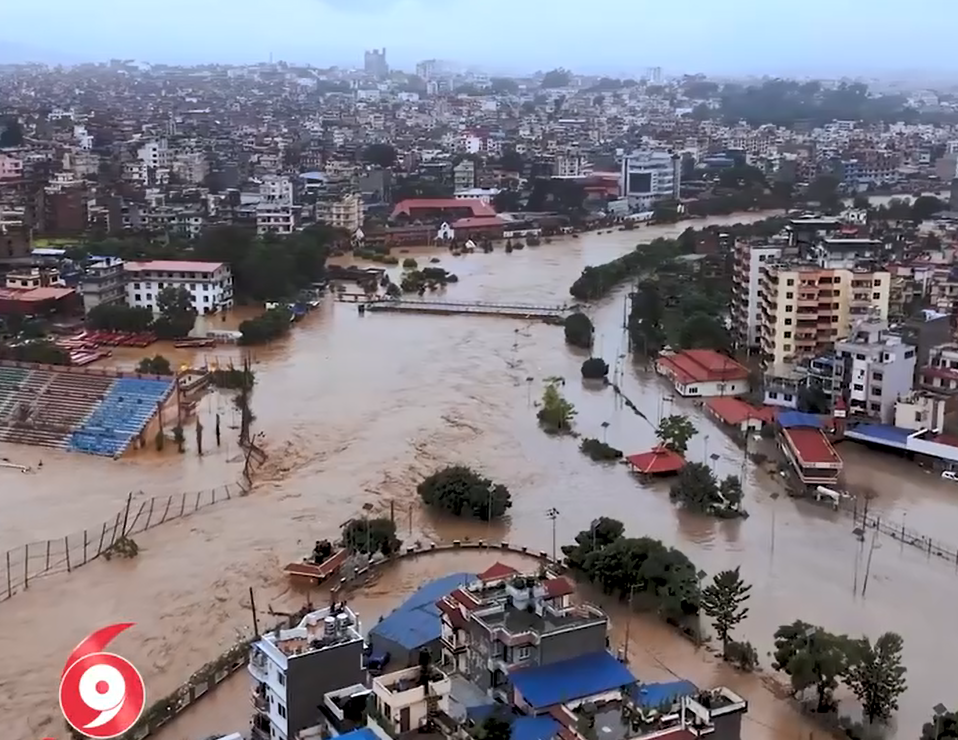
There are problems associated with low-level bridges that are designed with assumption of being a high-level bridge. The hydrodynamic forces, such as drag and lift created by floods on bridge components such as railings and decks, generate destabilizing forces that compromise the safety of the bridge. The pedestrian bridge at UN Park was washed away due to drag created by debris stuck to its gabion mesh railings during September 2024 flood.
Meanwhile, restricted flow area due to low-level bridges tend to extend backwater effects and intensify upstream flooding, while also accelerating flow velocities downstream. During the same flood, cars, police booths, and boundary walls were washed away, while the ground floors of houses were flooded around the permanent bridge at UN Park. Likewise, the flow becomes pressurized when passing under the bridge, as evident from the severe bed and bank erosion at the Nakkhu Kusunti Bridge.
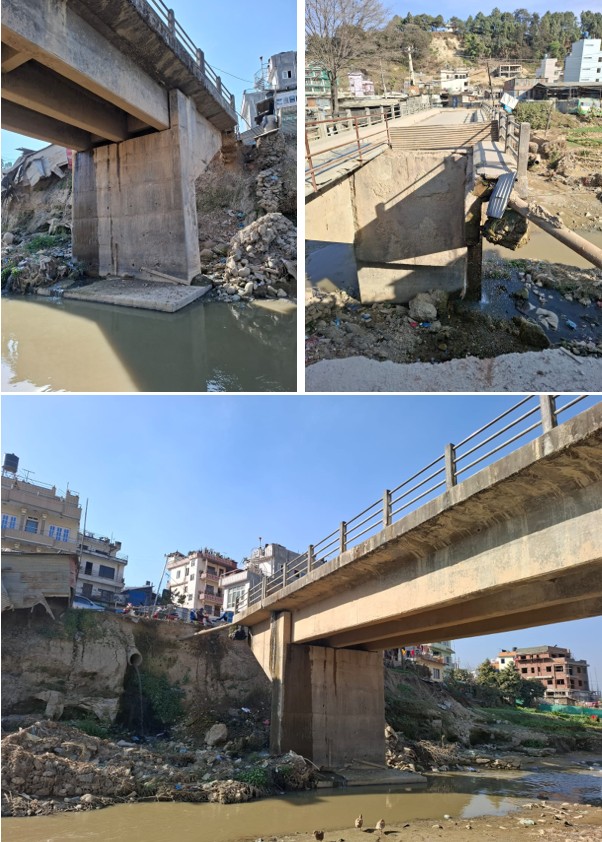
Such bridges need immediate attention from the authorities. How can we make flood-adaptive bridges along our river corridors? We need solutions for both existing and future bridges.
The hydrodynamic forces on railings can be mitigated by providing hinges at the base of the railings, which can be unlocked by the pressure force of rising floods, allowing the railings to “sleep” along the bridge deck in the direction of flow. Such techniques can be researched by engineers using computer simulations and prototype testing. Patent AU 2008100041 B4 and related research by the Texas Department of Transportation may provide good references. New railings can be piloted at a few bridge sites and further refined before being implemented in all vulnerable bridges.
Existing low-level bridges with simply supported spans can be retrofitted with uplift-resistant bearings. For new bridges, an integral bridge (where the superstructure is monolithically connected with the supports and foundation) should be proposed. The Department of Roads (DoR) has taken a step in this direction by modifying a simply supported bridge design into an integral bridge during construction of the new Rudramati bridge near Madan Memorial College. Integral bridges also have the advantage of a reduced deck thickness.
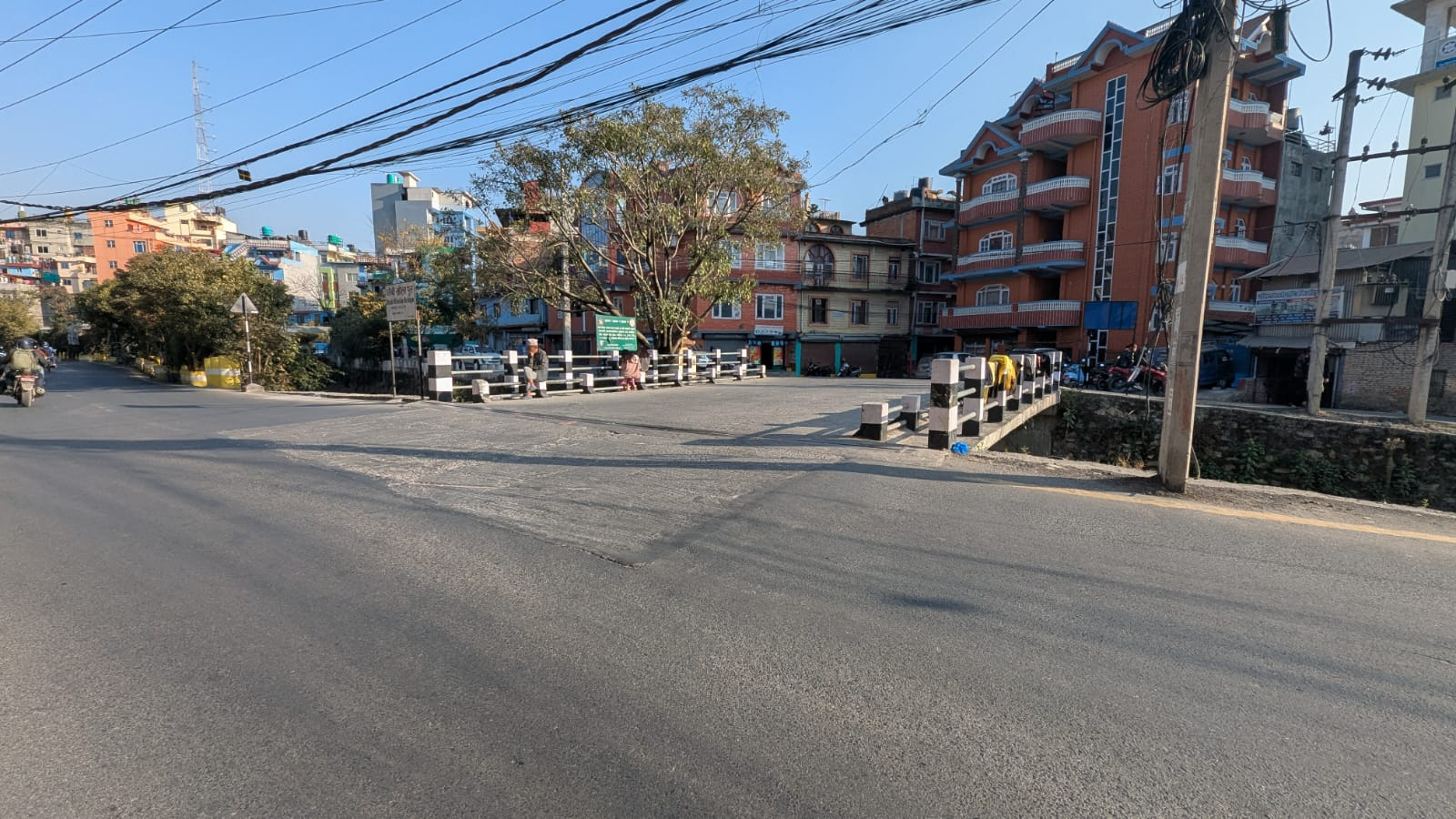
Since the length of corridor bridges is most often constrained by the construction of roads and private land ownership along the rivers, only the vertical clearance offers some flexibility to designers for improving flood resilience. The use of modern construction materials to achieve low superstructure depth should be encouraged in new bridges. The Local Roads Bridge Programme (LRBP) constructed the new Bagmati Bridge near Sankhamul Park with a prestressed slab superstructure. The reduced deck thickness not only resulted in a gentler approach road slope, but also made it the only bridge along that reach not overtopped by the Bagmati during the September 2024 flooding.
There may be future scope of adding the bridge length as well, considering the ongoing discussion around expanding the river right of way by 10 to 20 meters on each bank. Such expansion will shift the corridor roads farther from the river, resulting in requirement of longer bridges. Thus, corridor bridge designs should incorporate provisions for span extension, specifically abutments designed to function as intermediate piers when needed.
Meanwhile, the standards should be updated to facilitate the design of submersible bridges for linking corridor roads. Hydraulic analysis should model flow obstruction by the superstructure and evaluate local scour under pressurized flow. The flood and debris impact must either be considered in the superstructure design or design of additional protective beams on the upstream of the deck. Furthermore, increased scour may demand stronger protective measures compared to the free-surface flow assumed in current practice.
A concerted effort between research bodies like our engineering institute and execution agencies like DoR is immediately needed to progress the design of flood-resilient bridges across our river corridors. The impact of Chobhar Gorge on Kathmandu flooding is widely debated, but the more likely culprit is rarely discussed.
(Jha is an Assistant Professor at the Institute of Engineering, Pulchowk Campus. Chaudhary is a Ph.D. student at Utah State University, USA.)